

Meals on Wheels America, Caesars Entertainment and
The Just One Project Partner for Food Relief
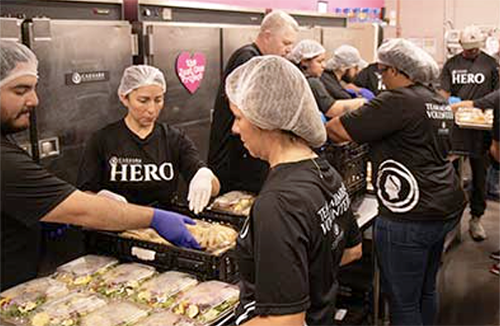
Meals on Wheels America teamed with Caesars Entertainment and The Just One Project to donate surplus food from its
52nd Annual Conference and Expo in Las Vegas to individuals in need around Southern Nevada.
By Todd McElwee
Assisting members of the Southern Nevada community struggling with food insecurity, Meals on Wheels America teamed with Caesars Entertainment and The Just One Project to donate surplus food from its 52nd Annual Conference and Expo. The event was held August 17–20 at Caesars Palace in Las Vegas.
“We are proud to partner with these incredible organizations to expand the impact of The Just One Project and help strengthen the communities we serve,” said Kiersten Flint, SVP of Corporate Social Responsibility and Internal Communications for Caesars Entertainment. “By bringing together businesses and nonprofits around a shared purpose, we’re creating meaningful change while advancing our commitment to corporate social responsibility and sustainability.”
“Our mission at Meals on Wheels America is to make sure no senior is left without the nutritious meals and moments of connection they need and deserve, and fighting food insecurity at scale is always top of mind for us,” said Ellie Hollander, President & CEO of Meals on Wheels America. “We’re proud to join Caesars Entertainment and The Just One Project in their fight against food insecurity in the Southern Nevada community during our annual conference in Las Vegas this year.”
Caesars Entertainment has a partnership with The Just One Project and its Food Rescue Alliance program. The partnership enables The Just One Project to repackage and provide prepared meals that remain after meetings, conventions and events to families, seniors, nonprofit partners and community organizations in need throughout Southern Nevada.
“Partnership is what allows us to turn resources into real impact,” said Brooke Neubauer, founder and CEO of The Just One Project. “Through our Food Rescue Alliance partnership with Caesars Entertainment, food prepared for events like the Meals on Wheels America Annual Conference can continue serving a purpose long after the event ends. By rescuing unused, untouched, prepared food, we’re able to extend its impact and provide quality meals to families, seniors and community partners throughout Southern Nevada. We’re grateful to Meals on Wheels America and Caesars Entertainment for working alongside us to ensure good food continues to serve our community.”
Exact food totals were not available as the conference continued past USAE’s press deadline.